Cornerstone Apologetics
Equip the global Church to know, defend, and communicate the truth of the Christian faith while engaging seekers and skeptics with the gospel through apologetics, discipleship, evangelism, education, and global mission.
Bible
·
Artificial Intelligence
·
Philosophy
·
Science
·
Ethics
·
Worldview
·
Faith
·
Bible · Artificial Intelligence · Philosophy · Science · Ethics · Worldview · Faith ·
Strengthening and equipping the Church through four interconnected pillars
-
![Acadamic publications and deep contextual studies on critical topics]()
Research
Acadamic publications and deep contextual studies on critical topics
-
![Geometric drawing of an outline square with sections divided by vertical, horizontal, and half circle lines.]()
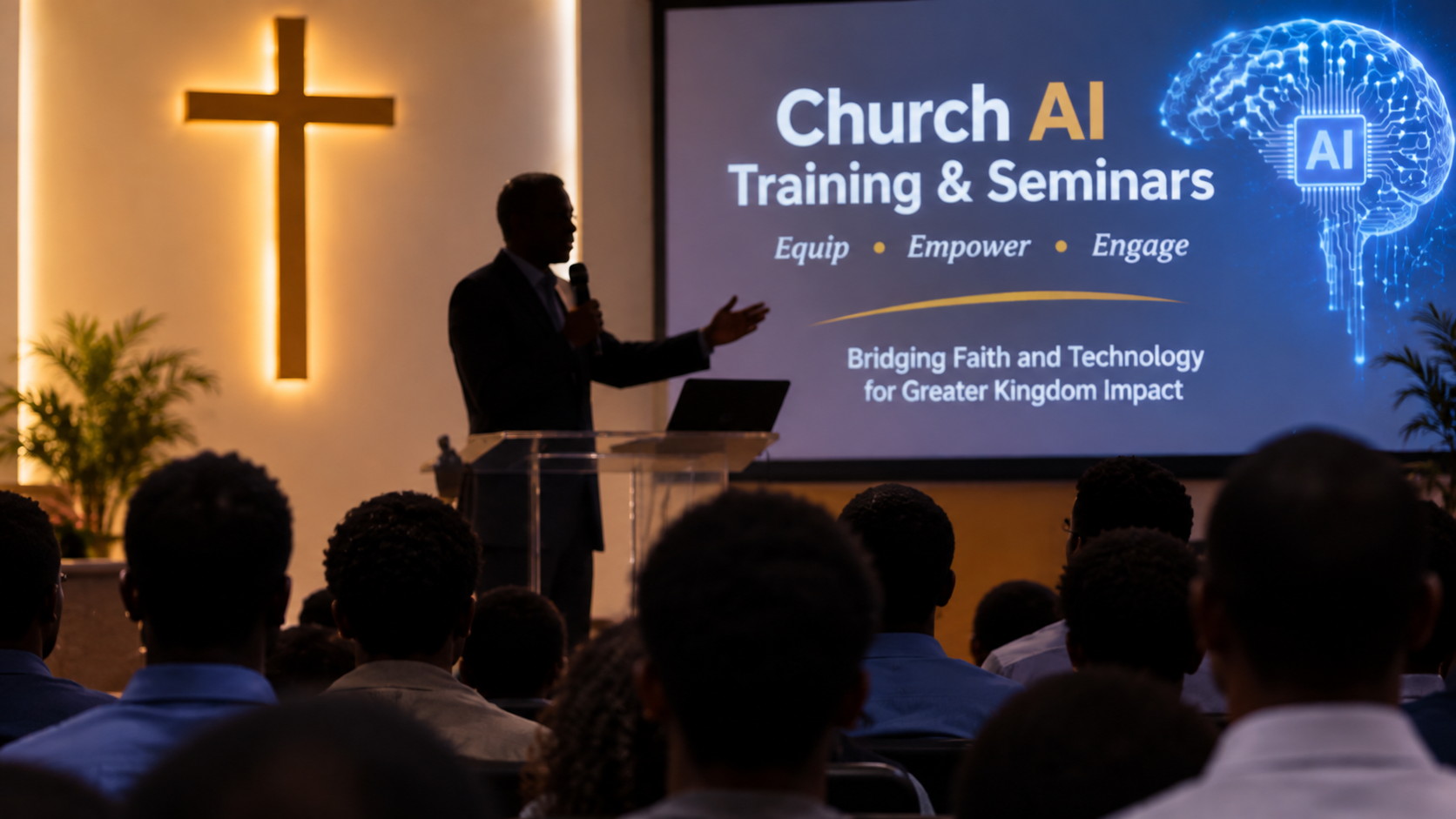
Training | Seminars
Building and Equipping the Church, Pastors, Youth directors and lay leaders through structured worshops and resources
-
![Church | Campus]()
Church | Campus
Equip and mobilize believers in churches and on campuses to become confident defenders and communicators of the Christian faith
-
![Digital Hub]()
Digital Hub
Producing accessible apologetics content through podcasts, social media other digital platforms to equip believers, engage seekers and reach a global audience


-
Did Christianity come to Africa through slavery and colonialism? This is a common assumption, but the history of Christianity tells a much older and richer story. Long before European colonialism and the transatlantic slave trade, Christianity had already taken root in parts of Africa.
One of the most remarkable biblical accounts illustrating Africa's early connection to Christianity is found in Acts 8:26–40, in the story of the Ethiopian eunuch.
In this passage, we meet an Ethiopian official serving under Candace, the queen of the Ethiopians. He was a man of influence who had traveled to Jerusalem to worship and was returning home in his chariot, reading the book of Isaiah. His journey reveals something significant: Africa was already connected to the biblical world and the story of God's unfolding plan.
As the Holy Spirit leads Philip to approach the chariot, Philip finds the Ethiopian official reading Isaiah and asks whether he understands what he is reading. Beginning with that very passage of Scripture, Philip explains the good news about Jesus Christ. As they continue their journey, the Ethiopian official believes in Jesus and is baptized.
This encounter is more than a personal conversion story. It is a powerful moment in the early expansion of Christianity, demonstrating that the Gospel was crossing geographical, cultural, and ethnic boundaries from the very beginning. Africa was not waiting for European missionaries or colonial powers to introduce it to Christianity. An African official encountered the Gospel in the first century, long before European colonial expansion.
Furthermore, Christianity developed deep historical roots in Africa, particularly in Egypt and Ethiopia. The Ethiopian Orthodox Tewahedo Church and the ancient Christian communities of North Africa stand as important testimonies to Christianity's early presence on the continent.
This does not mean that slavery and colonialism played no role in the later spread of Christianity in Africa. They certainly shaped parts of its history, sometimes in deeply painful and complicated ways. However, to suggest that Christianity arrived in Africa primarily through European colonialism is to overlook centuries of African Christian history.
The story of the Ethiopian eunuch reminds us that Africa is not an outsider to the history of Christianity. It has been part of that story from its earliest chapters.
The Gospel did not begin its journey into Africa with colonialism. Its roots on the continent reach back to the earliest days of the Christian movement. The Gospel was always meant for the nations.
-
Did you know that one of the most important historical references to Jesus outside the Bible comes from a first-century Jewish historian who was not a Christian?
His name was Flavius Josephus (AD 37–100), a Jewish historian who wrote Antiquities of the Jews around AD 93–94.
In his historical account, Josephus makes two significant references to Jesus.
1. Jesus and His Crucifixion (Antiquities 18.63–64)
Josephus refers to Jesus as a wise teacher who attracted many followers among both Jews and Greeks. He also connects Jesus' execution with Pontius Pilate, noting that his followers continued to identify with him after his death.
Interestingly, the passage contains two particularly remarkable statements:
"He was the Christ."
And concerning Jesus' followers:
"He appeared to them spending a third day restored to life."
These statements are especially significant because they echo two central Christian convictions: that Jesus is the Messiah (Christ) and that He rose from the dead.
2. James, the Brother of Jesus (Antiquities 20.200)
Josephus also writes about the execution of James, identifying him as:
"The brother of Jesus, who was called Christ, whose name was James."
This passage is particularly significant because its authenticity is widely accepted among historians.
Why does this matter?
Josephus was not writing to promote Christianity. He was a Jewish historian documenting the events and people of his time. His testimony provides valuable historical evidence outside the New Testament for:
The historical existence of Jesus.
Jesus' reputation as a teacher.
His crucifixion under Pontius Pilate.
The existence of his followers.
James, the brother of Jesus.
The early identification of Jesus as the Christ.
Josephus does not independently prove the resurrection or every Christian theological claim. Nevertheless, his writings provide important historical testimony about Jesus and the early Christian movement.
The historical case for Jesus extends beyond the pages of the New Testament. Even a first-century Jewish historian, writing outside the Christian movement, acknowledged Jesus' place in history and recorded traditions concerning the central claims of the Christian faith.